Conservation
WHAT TO SAY
Observations and sightings help conservation partners. Say them the same way you’d say a catch.
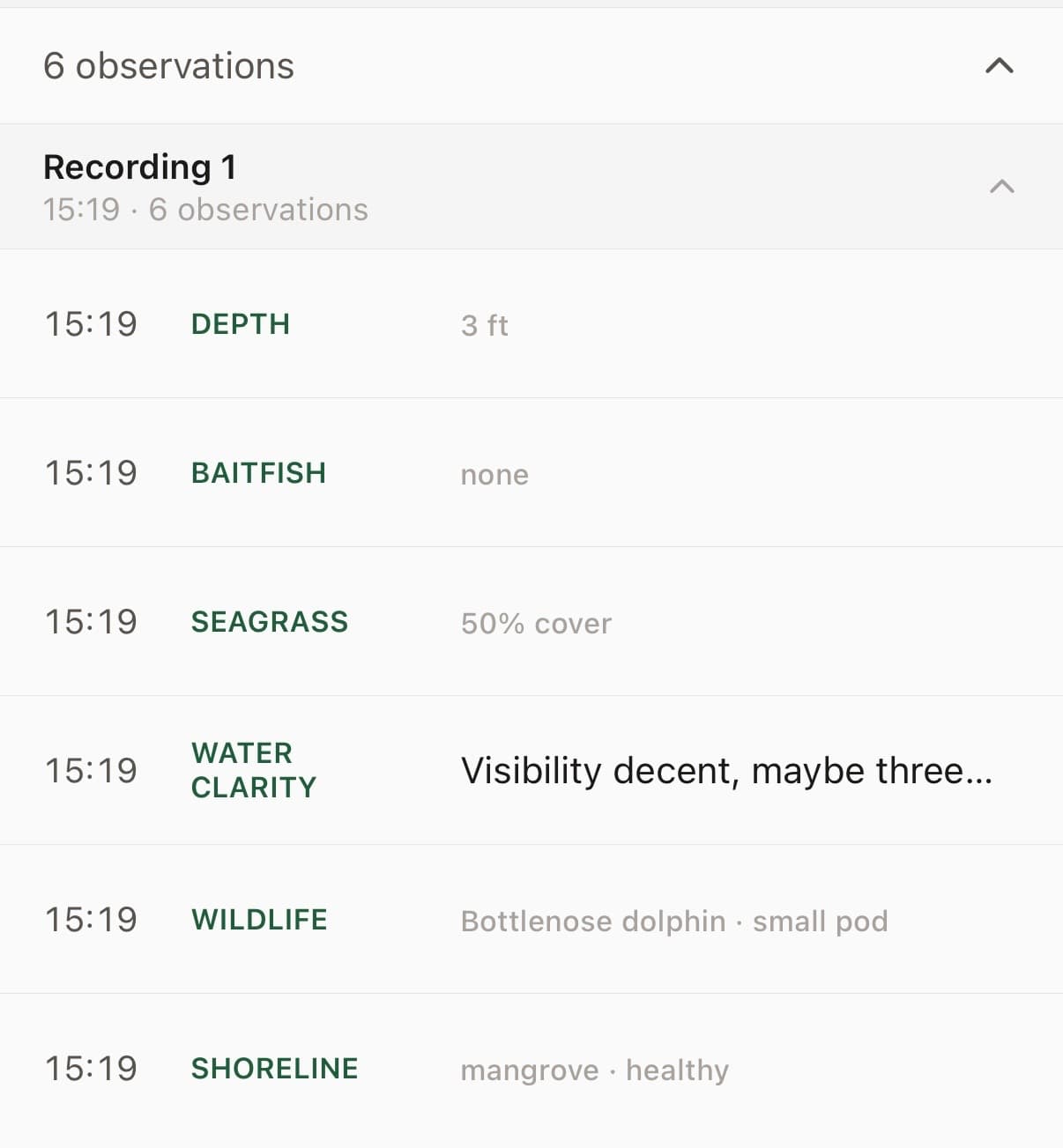
“It’s about 3 ft deep here. No signs of bait so far but there’s a lot of seagrass, covering about half of the bottom. Visibility is decent, maybe 3 or 4 ft. Saw a small pod of dolphin push through here 15 minutes ago. Mangrove shoreline looks healthy.”
WaterWatcher turns that into a structured log:
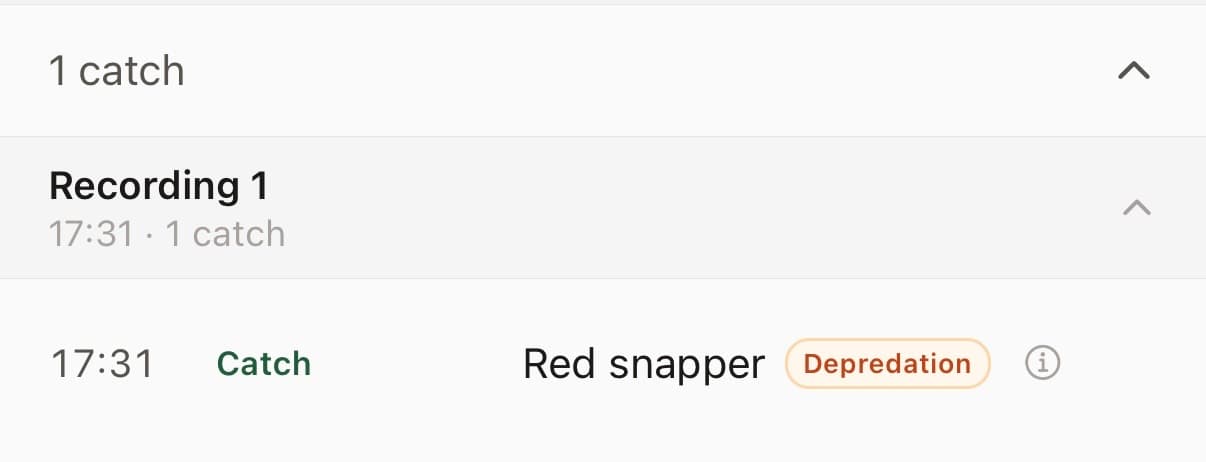
“Hooked a good red snapper out on the wreck, felt solid all the way up, then right at the boat a shark hit it. Came up half-eaten.”
WaterWatcher turns that into a structured log:
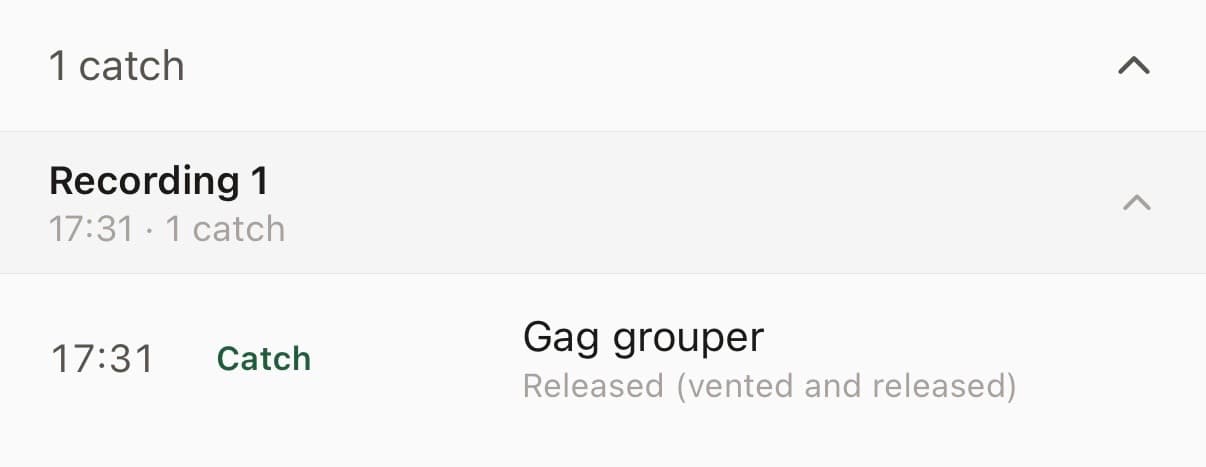
“Gag grouper today, good fish, vented it before letting it go, seemed to swim off fine.”
WaterWatcher turns that into a structured log:
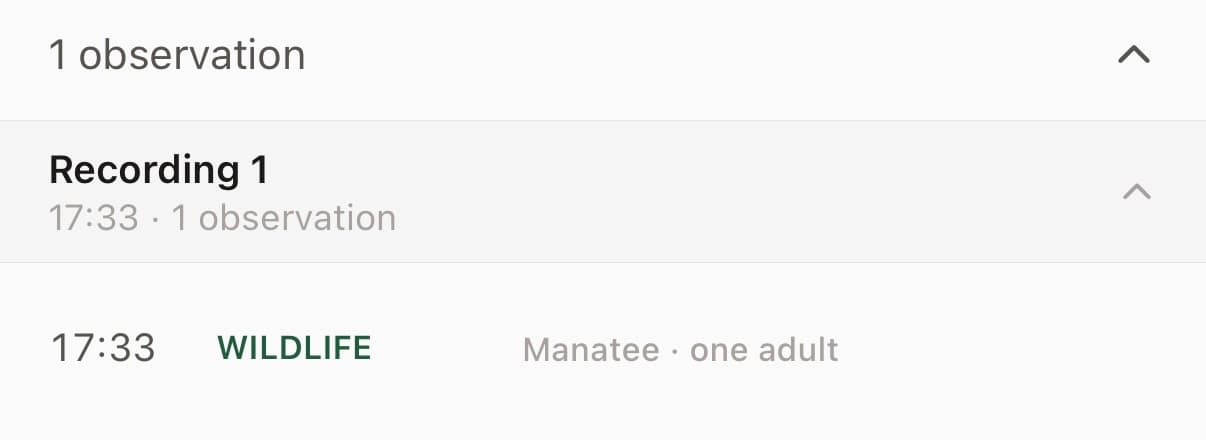
“Saw a manatee in the channel by the bridge, one adult, moving slowly north.”
WaterWatcher turns that into a structured log:
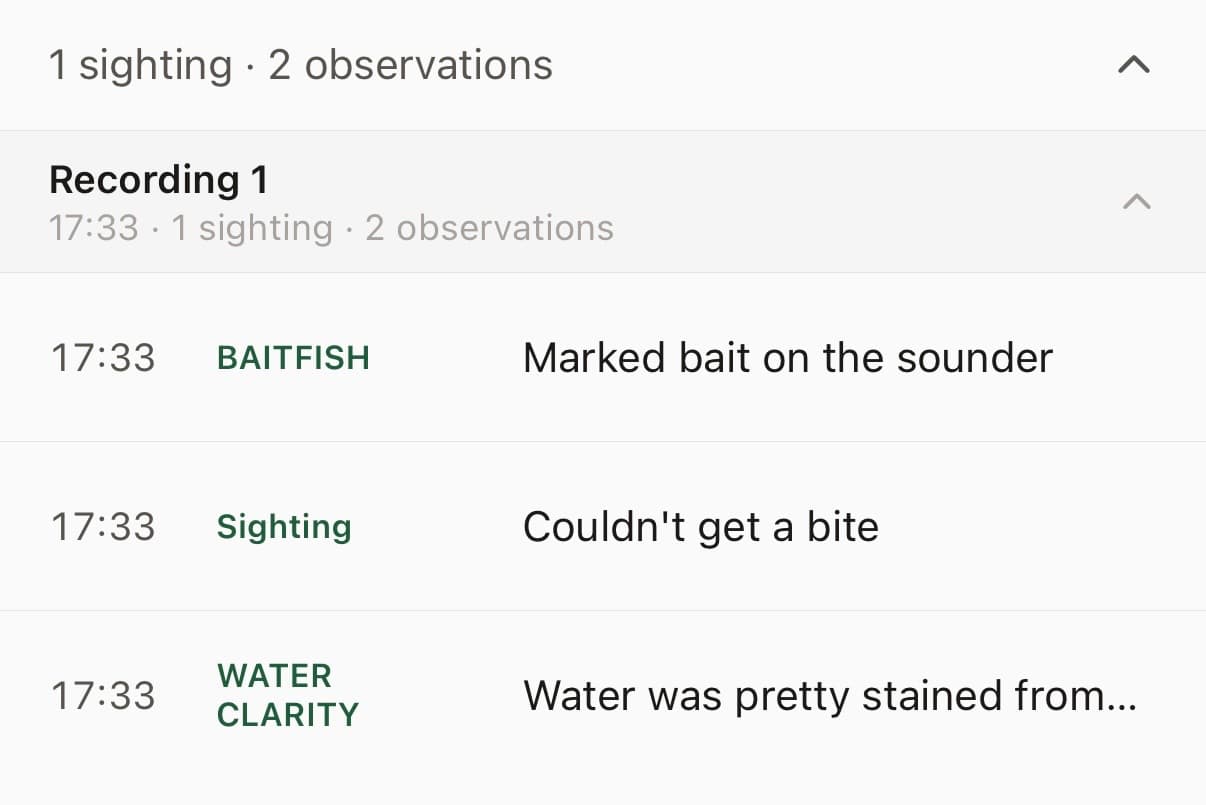
“Fished the reef for 3 hours, marked bait on the sounder but couldn’t get a bite. Water was pretty stained from the wind the last few days.”
WaterWatcher turns that into a structured log:
To log a water color reading, take a photo in any trip entry. See Water Color Photos.
WHY SKUNK TRIPS MATTER
A trip with no catches still counts. Conditions that don’t produce fish are just as valuable as conditions that do — they help build a real picture of what’s actually happening on the water, not just the good days. Log skunk trips the same way you’d log anything else.
It’s not just for the fishery, either. Every trip you log, catch or skunk, is saved in your log. Once a spot is part of your Pattern Engine, the trips you’ve already logged there count toward what WaterWatcher learns about it.
WHAT THE WATER-COLOR READING MEANS
When you take a water-color photo, WaterWatcher reads it using the Forel-Ule scale, a standard scientists use to track water clarity and quality over time. Logged consistently, these readings help build a picture of how conditions shift across a season. See Water Color Photos for how to capture one.
TAGGED FISH ENCOUNTERS
If you log a catch with a physical tag on it, WaterWatcher may ask permission to share the encounter details — like the tag number and where you caught it — with our conservation partner, so they can follow up and use it in their research. This is always your choice, asked fresh each time, and it doesn’t affect anything else about how your data is shared.